Blockers: Rebels in the Deep State
An inside look at the early days of Trump’s Department of Government Efficiency, as told by the public servants it targeted and one of America’s best storytellers. Blockers. It wasn’t…
BLOCKERS - New Audiobook from Bestseller Michael Lewis GET THE AUDIOBOOK EXCLUSIVELY HERE
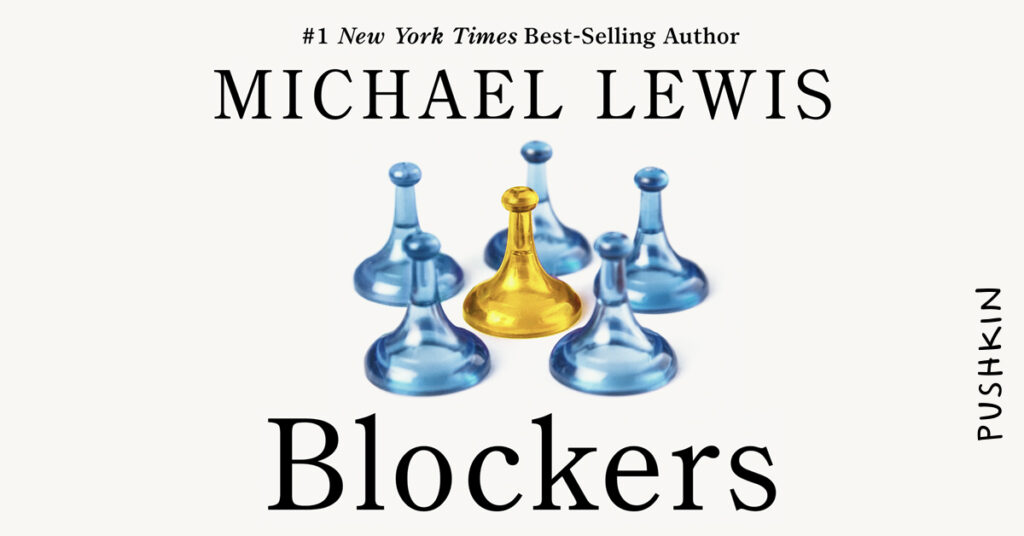
W. W. Norton & Company and Pushkin Industries are delighted to announce the upcoming publication of BLOCKERS: Rebels in the Deep State by #1 New York Times best-selling author Michael Lewis. Lewis, the author of seventeen previous books, began his publishing career at Norton in 1989 with Liar’s Poker, and has since written some of the most culturally important nonfiction of our time. The book, which will be published by Norton in hardcover on October 6, will be released simultaneously as an audiobook edition, available exclusively at blockers.fm for the first three weeks of publication. It will be produced and distributed by Pushkin Industries, who also serve as Lewis’s partner on his chart-topping podcast Against the Rules.
In BLOCKERS, Lewis views the “meteor strike” of the second Trump administration through the eyes of the public servants targeted by the Department of Government Efficiency (DOGE). As he says, “Every now and then the world hands you the material for a wild story. The collision between the Trump Administration and the civil service is one of those moments. I’ve had so much fun writing this book that at times it has been hard to know whether to laugh or cry.”
An inside look at the early days of Trump’s Department of Government Efficiency, as told by the public servants it targeted and one of America’s best storytellers. Blockers. It wasn’t…

As Lewis explains, in the new Washington, being a Blocker was the worst thing you could be—especially if you worked in the federal government and wanted to keep your job. A Blocker was a holdover, an impediment, someone who didn’t get the message—and, most of all, someone who didn’t belong.
In BLOCKERS, Lewis tells the story of seven people who believed they had a calling, who were convinced they were doing something the country couldn’t do without, and then discovered they were no longer wanted. One kept Americans’ most sensitive tax data out of the wrong hands and another made sure that politicians and civil servants played by the rules. One figured out how to stop wildfires from destroying suburban neighborhoods, another helped uncover the mysteries of cystic fibrosis.
There was also a security guard.
It should come as no surprise that the writer who made subprime mortgages gripping (The Big Short) and turned baseball statistics into poetry (Moneyball) could transform the first two years of the second Trump administration into a thriller about federal employees. But he does. And he also puts before us a clear question: If these public servants can’t survive in government today, then what does that say about us?